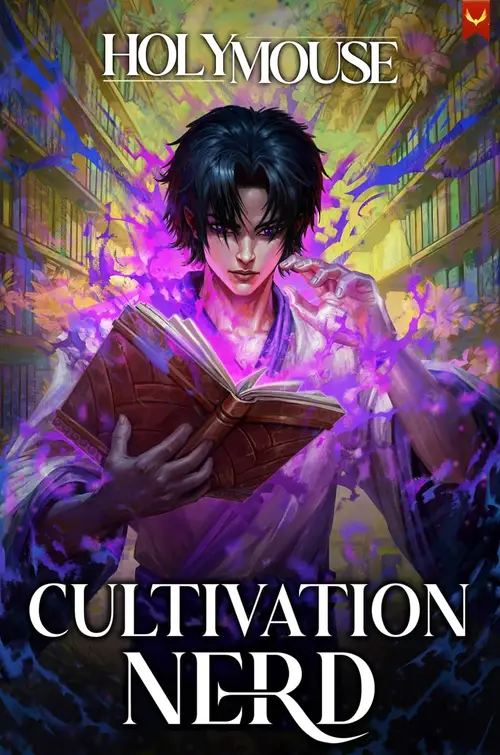
A genre-savvy transmigrator just wants to be left alone in the sect library. Fun trope-work, let down by loose worldbuilding and editing.
A genre-savvy transmigrator just wants to be left alone in the sect library. Fun trope-work, let down by loose worldbuilding and editing.
To defy the Heavens, he must earn his masters in magic.
For Liu Feng, death isn’t the end. Now, he’s stuck in a new world with magic that clearly doesn’t obey the laws of physics, surrounded by arrogant young masters who seek to advance their power by any means necessary.
Good thing Liu Feng has always been smart.
He can absorb texts and master techniques to advance his knowledge faster than others, uncovering the secrets of magic at a fundamental level. Plus he can bring a level of compassion and empathy only a human would understand, to see things from new angles.
But being different makes him a target.
Liu Feng can only avoid the problems and attention of other cultivators for so long before he must fight. Only then can he become a master…
I picked this up from a Reddit thread asking for series that people often dislike but you’d personally rate 10/10. Dangerous sourcing, and having read the first two books, I can see both halves of that thread. It’s a fun read if you have a laid back cultivation itch. Butttt maybe not a 10/10.
The premise is a western take on transmigration cultivation. Liu Feng wakes up in the body of a middling-talented cultivator after a fight, and all he really wants is to be left alone in the library with his books. Somehow his talent starts growing anyway (turns out he’s got a strong soul, being two people smooshed into one), and that growth starts him up the ladder and draws the attention of cultivators far more notable than he’d like.
The trope-work is the best part. Liu Feng read a mountain of xianxia before he died, so he spends the whole book warily pattern-matching everything against the cliches he knows, including clocking an actual protagonist-type character: massive luck, draws conflict to him like a magnet, best avoided at all costs. When that genre-awareness is front and centre, the book is genuinely fun.
The not-as-good is the worldbuilding and the technical writing. For the worldbuilding, here’s my favourite example from book one: Liu Feng leaves the sect for a few days to visit the nearest town and buy a turtle, runs away from an explosion, and stumbles into a new town where nobody can give him directions home because nobody has heard of his sect. Then, later in the same book, it’s revealed that the Blazing Sun Sect manages continent-sized territory and is one of the premier sects around. So like… how do both of those work at once? There’s a non-zero chance I misread the first encounter (as I do read late at night and while tired), but at the end of the day, even though there’s a fair amount of expositionary text, I didn’t come away with a firm understanding of the world, its politics, history, or territory, or how the sect and Liu Feng actually fit inside it.
For the technical writing, apart from the telling-over-showing we get a lot of, there are tons of editorial misses on duplicated phrases and retellings. For example:
He recognized the goodness in the youth and couldn’t help but see his younger self reflected in him from a certain perspective…
He saw Liu Feng for who he truly was and, in many ways, saw a reflection of his own past self in him.
If this was on Royal Road, very understandable. But I read the Kindle release, with Aethon as the publisher, and I’m scratching my head over whether this had an editing pass at all.
Still, it’s fun, and I’ll keep going. Just don’t walk in expecting the perfect marks the original commenter handed out.